Skip to content

In 2017, I served as a volunteer for a refugee camp on the Greek island of Chios. 

What follows is a photographic essay I wrote about my experience.

The Exile in All of Us Photos and story by Angela Atkinson
Sunrise over the coast of Turkey

This morning, I will serve tea to 275 refugees at the Souda refugee camp on the island of Chios, Greece.

It’s quiet in the camp in the mornings and communications are generally non-verbal.

Four fingers means four heaping teaspoons of sugar in a half-cup of tea. A few of the men will abruptly grab the teaspoon out of my hand to stir the sugar themselves. I get it.

In this refugee camp where most of these men have little control over their destinies, stirring their own tea is a small gesture of autonomy. Largely symbolic however, as for many of these refugees, their main activity is waiting.

Unable to return to their home countries and unable to move forward, they wait for decisions from the Greek government on the status of their asylum claims.

As one man told me: “Every day, is same.”

–Journal entry, August 28, 2017

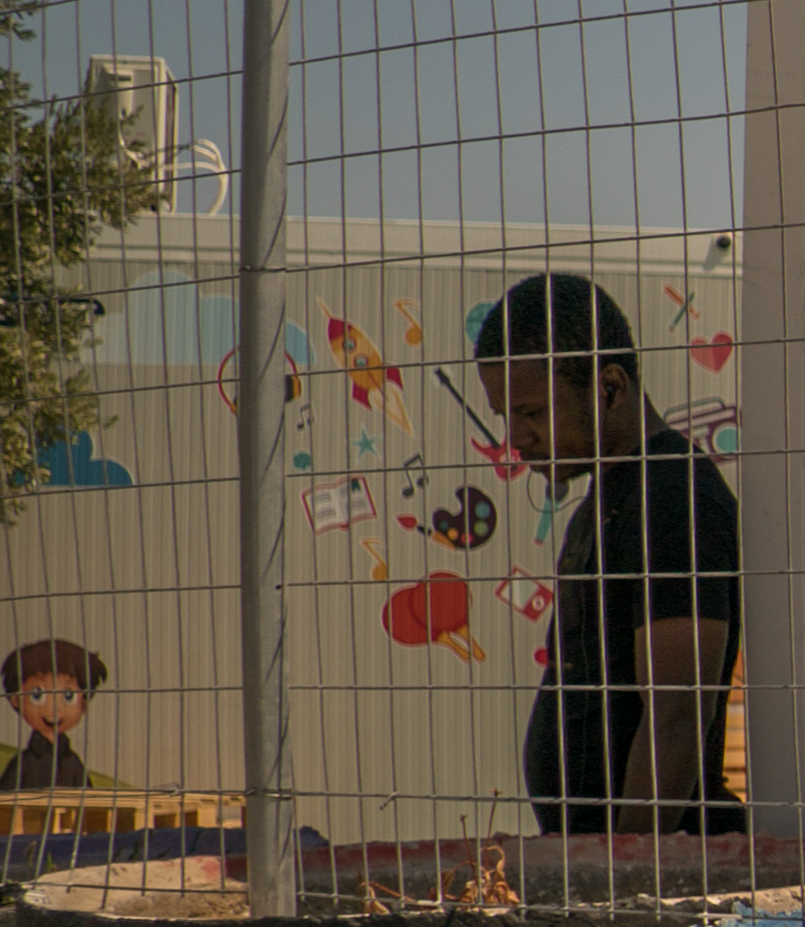
Refugee on outskirts of Souda Refugee Camp, Greece

I was among the millions who, in 2015, saw the photo of the Syrian toddler washed up on the shores of Kos. Like many parents, I thought, “this little one, with his t-shirt and tiny Velcro tennis shoes . . . he could be my child.” But it wasn’t until two years later, several months after the U.S. presidential election, that the full impact of this photo sank in, and I started to wake up to the bubble I’d been living in.

While my heart cracked open at the senseless horrors of the Syrian war and the world’s seeming indifference, it was my mind that began to yield to the reality of how dire our political, economic, and environmental predicaments were here at home.

Gone was the delusion that all I have to do is recycle, and our world will be okay. Gone was the illusion of who I thought we were as a country…and of who I was as an American.

I could no longer not see the ugliness and divisions fracturing our country, with “us” on one side and “them” on the other. Exposed was our brokenness, our polarization, our separation.

The only thing that made sense to me was to leave the confusion and chaos of home for a place where our political melodramas paled in comparison to the realities of dire human suffering. I wanted to get my hands dirty, be of direct use, make a difference that I could see. I wanted to escape.

And so I volunteered to work in a Syrian refugee camp in Greece.

SOUDA REFUGEE CAMP A few miles from the coast of Turkey, the island of Chios is among a handful of Greek islands that have been flooded with thousands of refugees escaping wars in Syria, Afghanistan, Iraq, and other Middle Eastern countries.
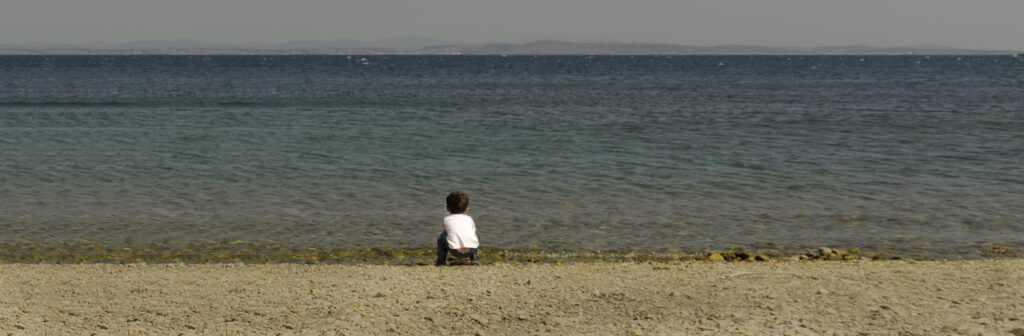
Young Syrian boy on beach next to camp

The Souda refugee camp was established in 2015 as a temporary facility to house the massive influx of refugees fleeing conflicts in the Middle East. As the exodus from Syria and other Middle Eastern countries continued unabated, the camp moved from a temporary stopgap measure to a semi-permanent fixture on this small Greek Island.

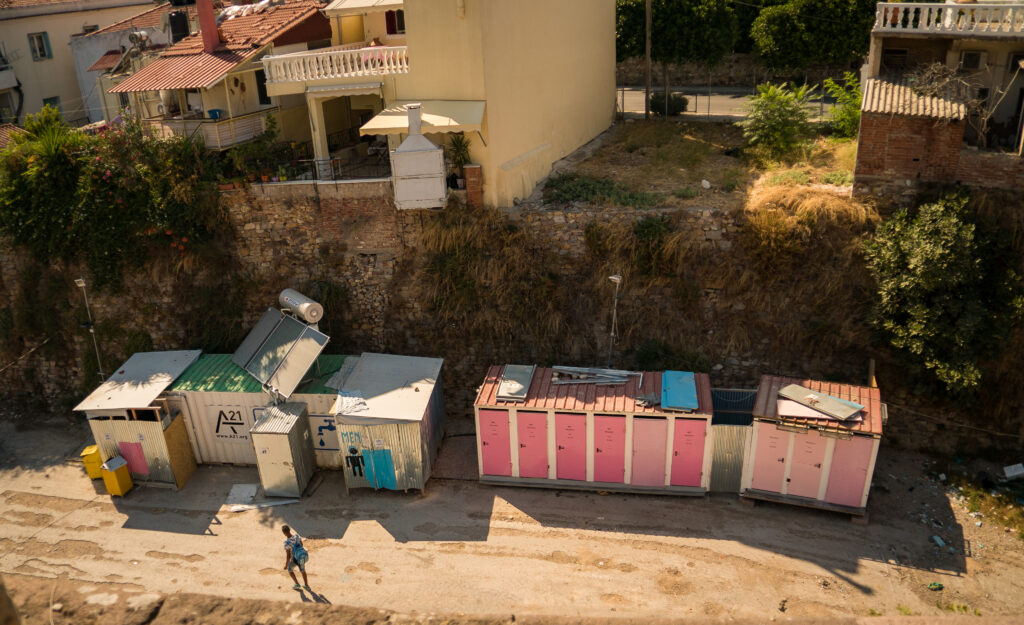
The camp itself was located on the floor of a ancient moat surrounding a Byzantine-era castle (“souda” means fence or moat in Greek). Middle-class homes overlooked the rows of tents and portable toilets, with villagers able to look down on the movements and activities of the refugee city below.

Toilets and showers for 275 men, with middle-class homes right above

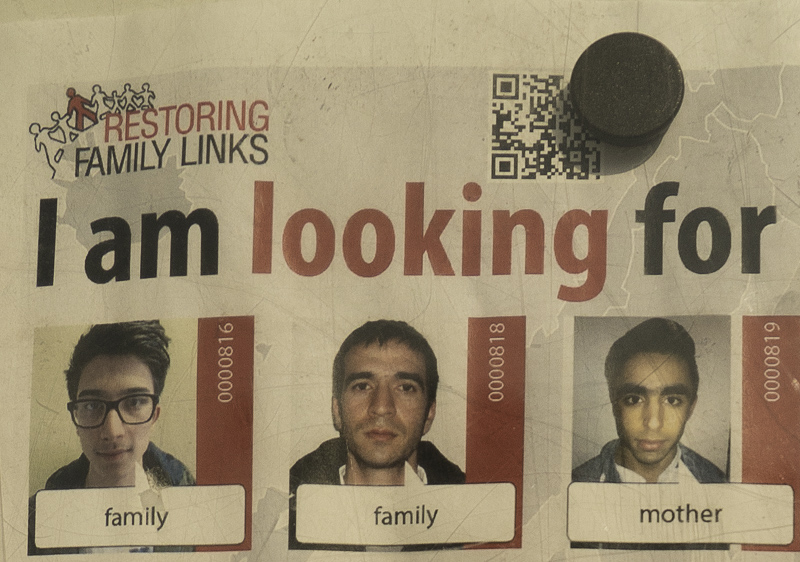
Nearly all of the refugees in Souda were men under 30. Most were alone. Flyers with pictures of refugees hung like “wanted” posters in a kiosk near the entrance to camp. The mugshot-like photos were accompanied by pleas for locating a “mother” or “son” or “husband.” Most simply said “family.”

Posters seeking to connect refugees with their loved ones

Some men had been in Souda camp for over a year. A number of the refugees bore the scars of torture, self-mutilation, suicide attempts, and depression. They told their stories in a monotone so devoid of emotion that I was as troubled by the delivery as the visible evidence of trauma. I suspected that maybe the telling and re-telling of their stories had a numbing effect on them.

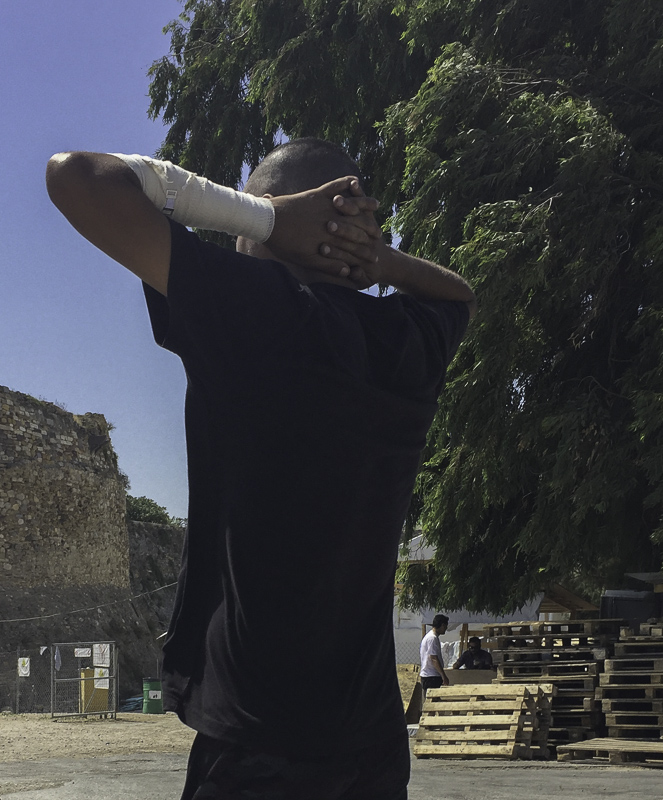
Refugee in the Vial Detention Center, a military-run camp for overflow
This young man had just returned from the hospital after a suicide attempt the evening before

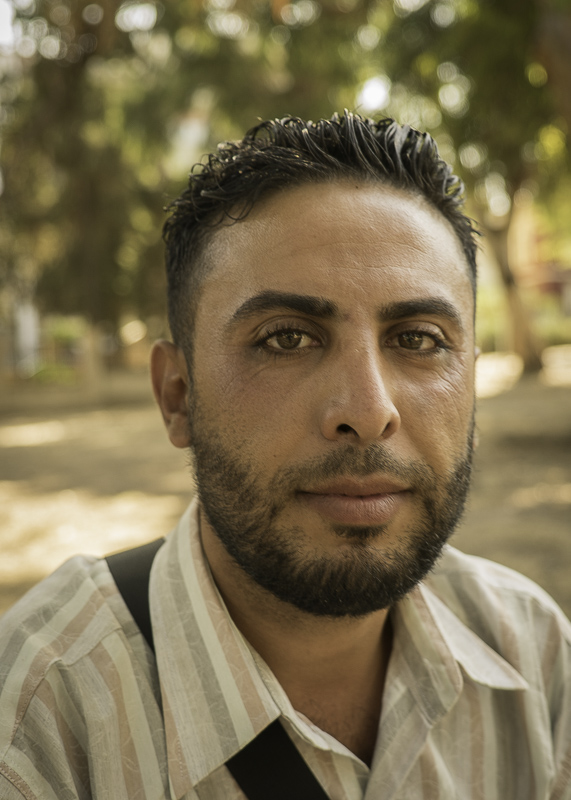
This is Abdullah from Homs, Syria. He lost his wife at 24 to a barrel bomb attack by the Syrian government. When I asked more about her, he cut me off, saying, ‘I don’t want to talk about my wife, about my past. My past is gone. She is gone.”

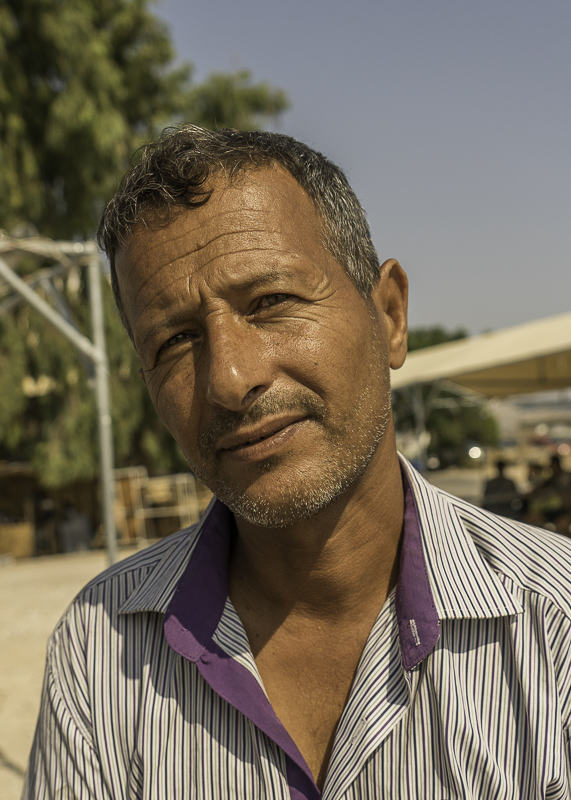
My friend Nasim from Iraq took great pride in his family, showing me photos of his wife and daughters. He spoke no English, and the extent of my Arabic was “hello,” “goodbye”, and “Ali Baba!” However, I didn’t need to speak his language to see this man’s kindness.

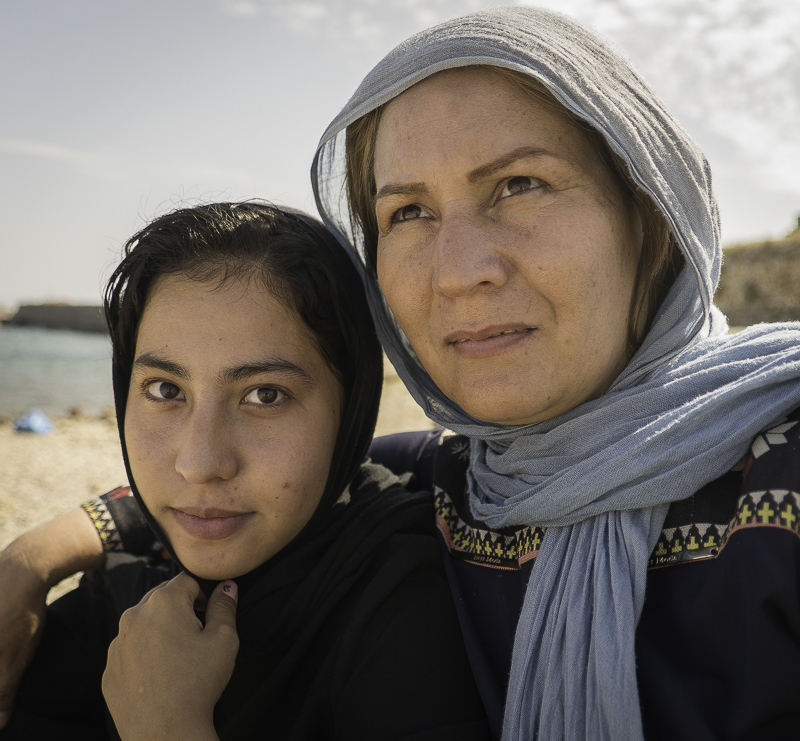
One afternoon, as I was doing lifeguard duty to make sure the children are safe in the ocean, two women sat down beside me. It was a mother and daughter from Afghanistan who had just picked up their lunch from the food line. Today, they had couscous salad, pita bread, tomato, and an apple.

The daughter spoke English, and asked me my name. They told me they had fled the war in Afghanistan, and were hoping to go to Sweden so that the daughter could get an education.
 

They asked if I had children. I told them about my daughters and showed them pictures. I noticed that I didn’t tell them my youngest was going to college and my oldest was a raft guide in Colorado.

The mother seemed to understand my discomfort. Without speaking, she looked me in the eye and took my hand, placing in it an apple and tomato.
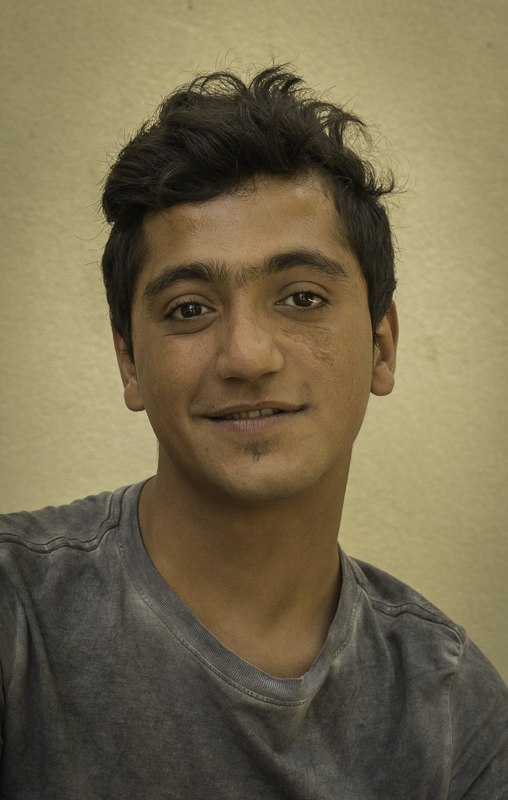
Mohammed is 21 years old, a Syrian Kurd. He speaks seven languages. His voice softened as he showed me pictures of his mother and five brothers and sisters. When he was still in Syria, he was studying to be a doctor. For reasons unknown to him, he was imprisoned and tortured as a teenager for six months in a Syrian jail. Even with his visible physical scars, his asylum claims have been repeatedly denied by the Greek authorities.
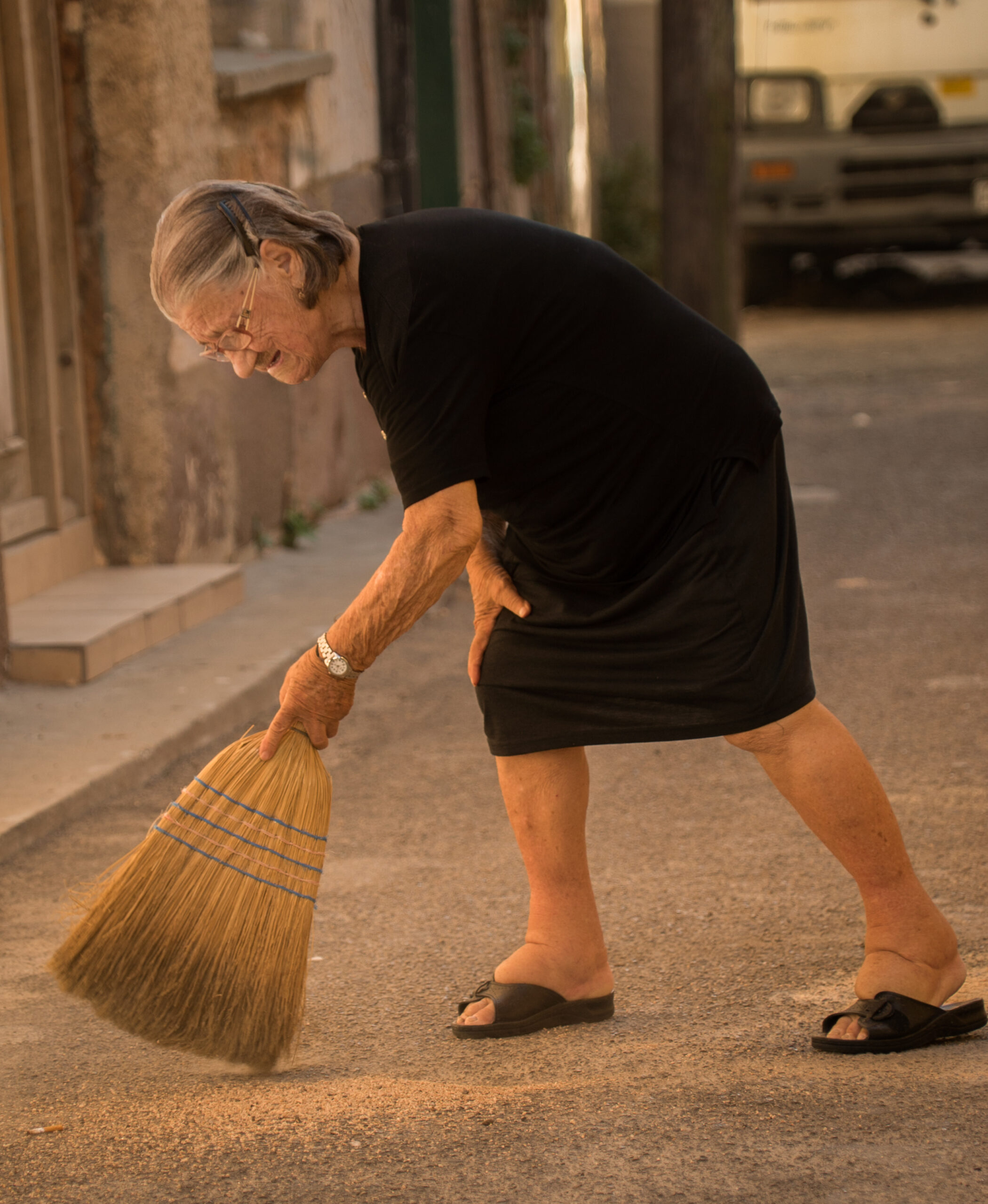
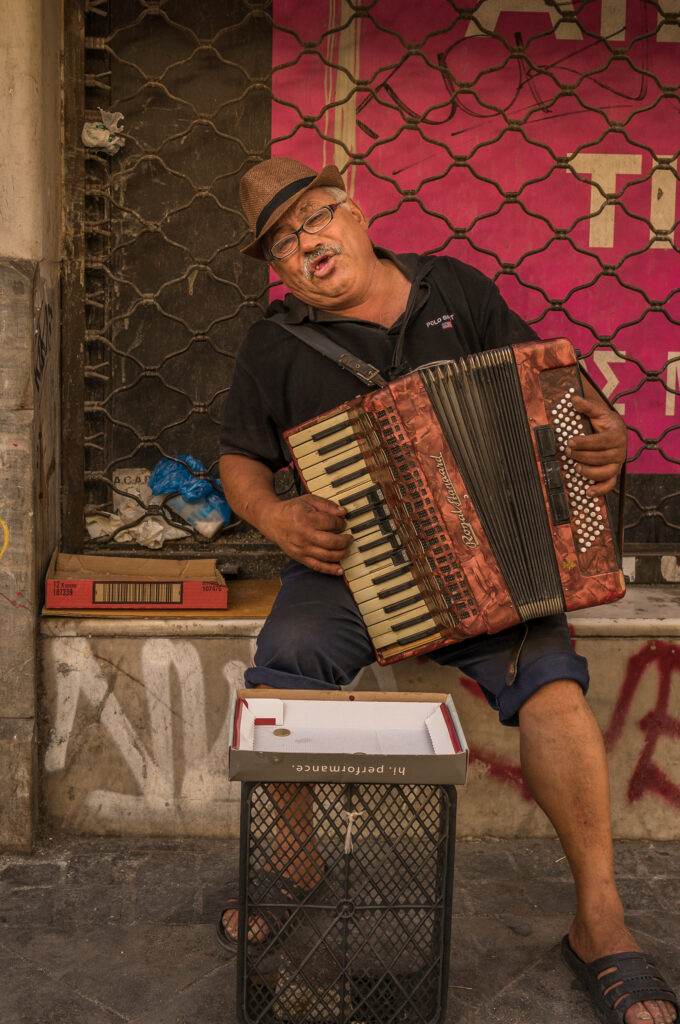
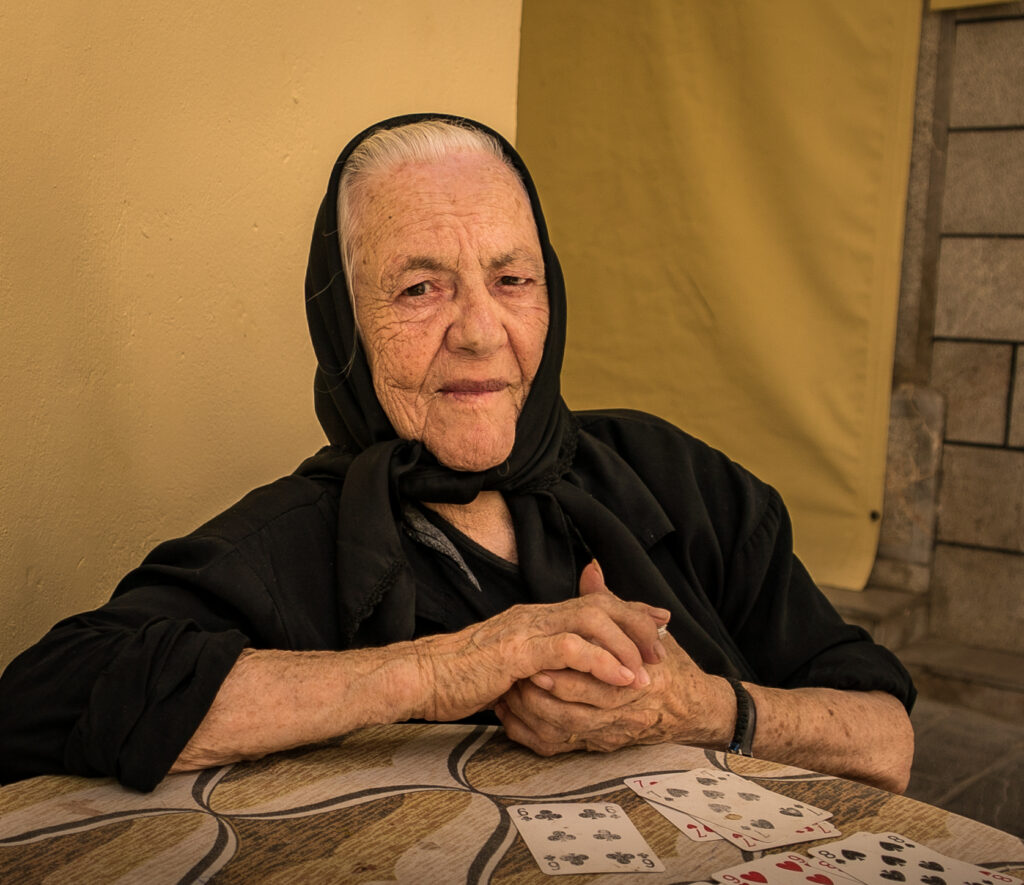
CHIOS – An Island Paradise Chios is a stunningly beautiful island, a seaside tourist mecca known for its bustling port, sailing regattas, and ancient monasteries. After my shifts at the camp, I would walk the narrow streets of the village taking photographs. On the other side of the fence enclosing the camp, I saw locals living lives of normalcy — drinking coffee with friends, going to mass, and sipping ouzo on a door stoop.
I also saw mental illness, alcoholism, and sadness. Everything inside the camp walls existed on the outside, too.

HOME
 
Upon returning to the United States, the most dominant emotion I felt was anger. Rage at the indifference. Rage at the entitlement, at our collective narcissism.
 
As I write this, the U.S. administration just slashed the quota of refugees it will accept to 30,000, the lowest level since the inception of the resettlement program in 1980. Among the wealthiest nations in the world, the United States ranks behind New Zealand, Iceland, Finland, Sweden, Canada, Australia, Norway, and Monaco in per capita resettlement (source: Eleanor Acer and Natasha Arnpriester, “U.S. Leadership Forsaken: Six months of the Trump Refugee Bans” (Washington: Human Rights First, 2017).
 
How easy to love the refugees, the suffering, the poor, the defenseless. The Muslims, the Iraqis, the Afghanis. Yet how difficult to love my own people.
 
And, to be honest, how difficult to forgive myself. How asleep and indifferent I had been for so many years. How embarrassed of my own privilege. The chasm that I had projected as being out there between ‘us and them’ – it was in me, too.
 
My heart, like Chios divided – on one side, an ordinary mother who shops for her family, pays bills, and takes walks in the neighborhood. And on the other side, an exile displaced in my own country, asking: “is this who we really are?”

FREE Dreamwork Guide